
Prof. Jakub Kupecki
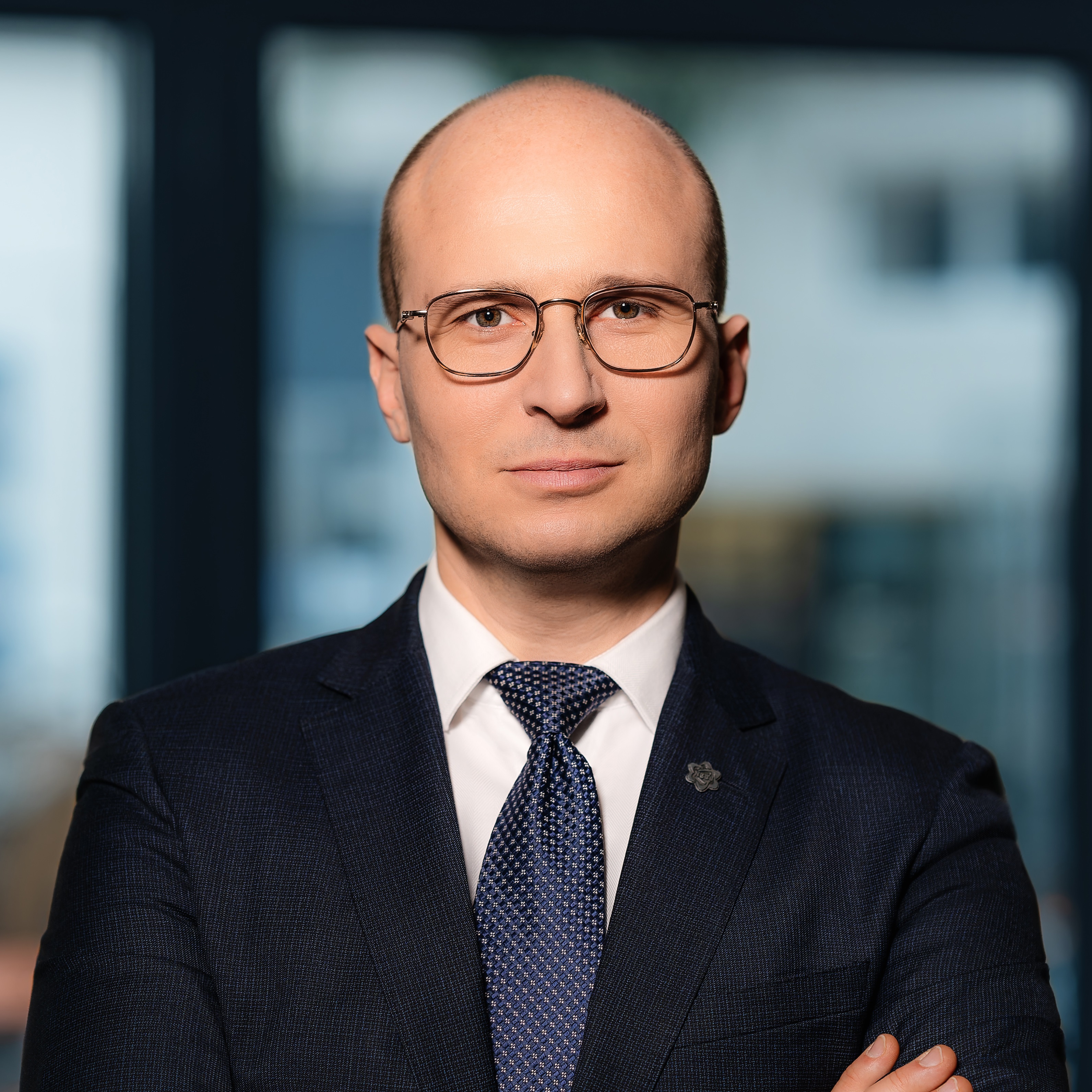
National Centre for Nuclear Research, PL / Center for Hydrogen Technologies, Institute of Power Engineering, PL / Clean Energy Institute, University of California, US
Poland
Professor Jakub Kupecki, DSc, PhD, Eng. is a distinguished scientist and expert in advanced energy technologies, currently serving as Director of the National Centre for Nuclear Research (NCBJ), Poland. His research focuses on energy conversion systems, particularly fuel cells, electrolyzers, and hydrogen technologies, with a strong emphasis on solutions supporting the energy transition and the development of a low-emission economy. Professor Kupecki is affiliated with the National Centre for Nuclear Research (Poland), the Center for Hydrogen Technologies at the Institute of Power Engineering – National Research Institute (Poland), and the Clean Energy Institute at the University of California, Irvine (USA). He is the author of numerous scientific publications and an active participant in national and international research and development projects. In 2025, he was appointed Director of NCBJ, one of Poland’s leading scientific institutions.
Electricity is not the only reason - decarbonization of industries using nuclear reactors
During the last three decades Poland entered path of deep decarbonization and replacement of fossil fuels-based energy system toward mix with large share of renewable energy sources. At the same time, the country diversifies technologies, emphasizing the role of sectorial coupling, energy storage and interconnectors. Cutting emissions in the electrical grids requires gradual replacement of power plants with alternative technologies. These mostly include large nuclear power plants (NPP), which typically need more than 10 years. At the same time, nuclear reactors can be engaged in sub-GW scale systems, mostly based on small modular reactors (SMRs). This technology relies on either well-know and established reactor designs which are downscaled or on novel designs which offer more than one option how they can be used. For example, advent of high-temperature gas cooled nuclear reactors (HTGRs) makes it possible to replace existing technologies for generating high-ethalpy heat in a form of steam or hot gases. Other applications include integration of HTGRs and SMRs in systems producing synthetic fuels, making them prime movers in cogeneration and polygeneration units. Poland currently identifies 8 scenarios which can bring the economy to net-zero emissions by 2050. As a result of studies conducted in frame of those analyzes, the potential for reducing emissions which accompany various sectors were identified. One of important take away messages is that application of nuclear reactors may not and should not be limited only to the production of low-emission electricity. As nuclear reactors of various types are identified as promising candidates for non-electrical applications, further exploration of that potential can be done only with the support of analyses. Beside techno-economic studies, overall life cycle assessment, life cycle emissions, end-of-life scenarios should be performed. Moreover, several of the applications rely on new processes, new schemes for integration, new modules, components and even new classes of materials. In that, the research society identifies completely new areas of scientific activities, experimental investigations, numerical studies and even more. For that reason, gradual introduction of nuclear-based systems in Poland triggers new areas of activities, and can add to the development of new skills, research methods, production facilities, new branches of the chemical industry, new tools for economic assessment.